Caregiver Reset: The One Who Stays
Caregivers don’t clock out.
They don’t get applause.
They don’t get recognition for the quiet moments.
They just stay.

The chair isn't built for comfort.
It is a generic, vinyl-clad, hospital-issue throne of endurance. It creaks when you shift your weight. It bites into your lower back after the second hour. By the tenth hour, it feels like it’s trying to absorb you.
It is 3:00 AM.
The world outside has stopped, but inside this room, time has a different pulse. It beats to the rhythm of the monitors.
Beep. Hiss. Hum.
You are the one who stays.
You are the silent shift. The one who doesn't get a handover or a lunch break. The one who watches the IV drip and the rise and fall of a loved one's chest while the rest of the floor sleeps.
This is the reality of the caregiver. It isn't a highlight reel. It isn't a Hallmark card. It is raw, it is heavy, and it is exhausting.
But this is where grit is forged.
The Weight of the Silent Shift
In my years as an EMT and a First Responder, I’ve walked into thousands of these rooms. I’ve seen the faces of the ones who stay.
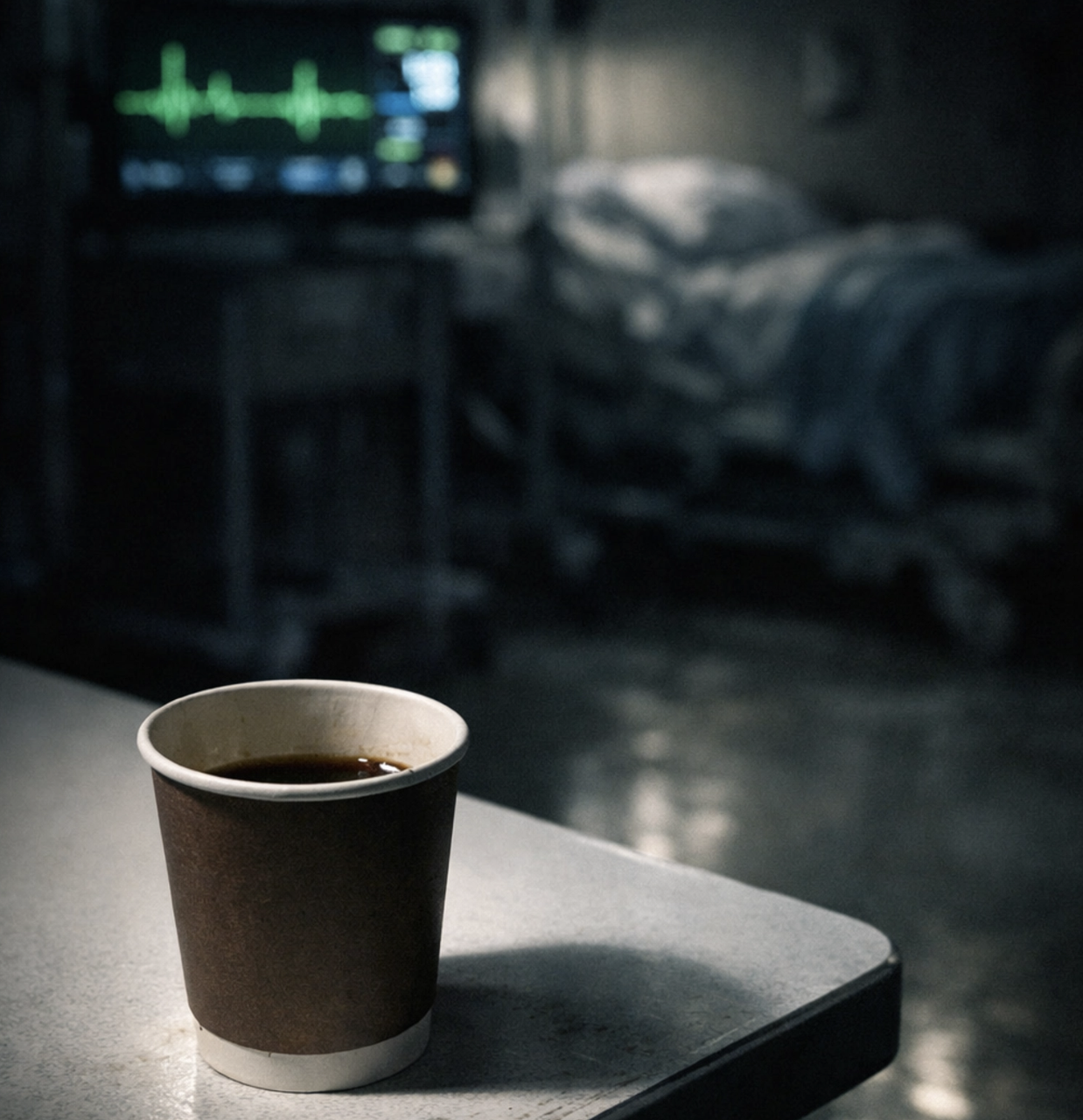
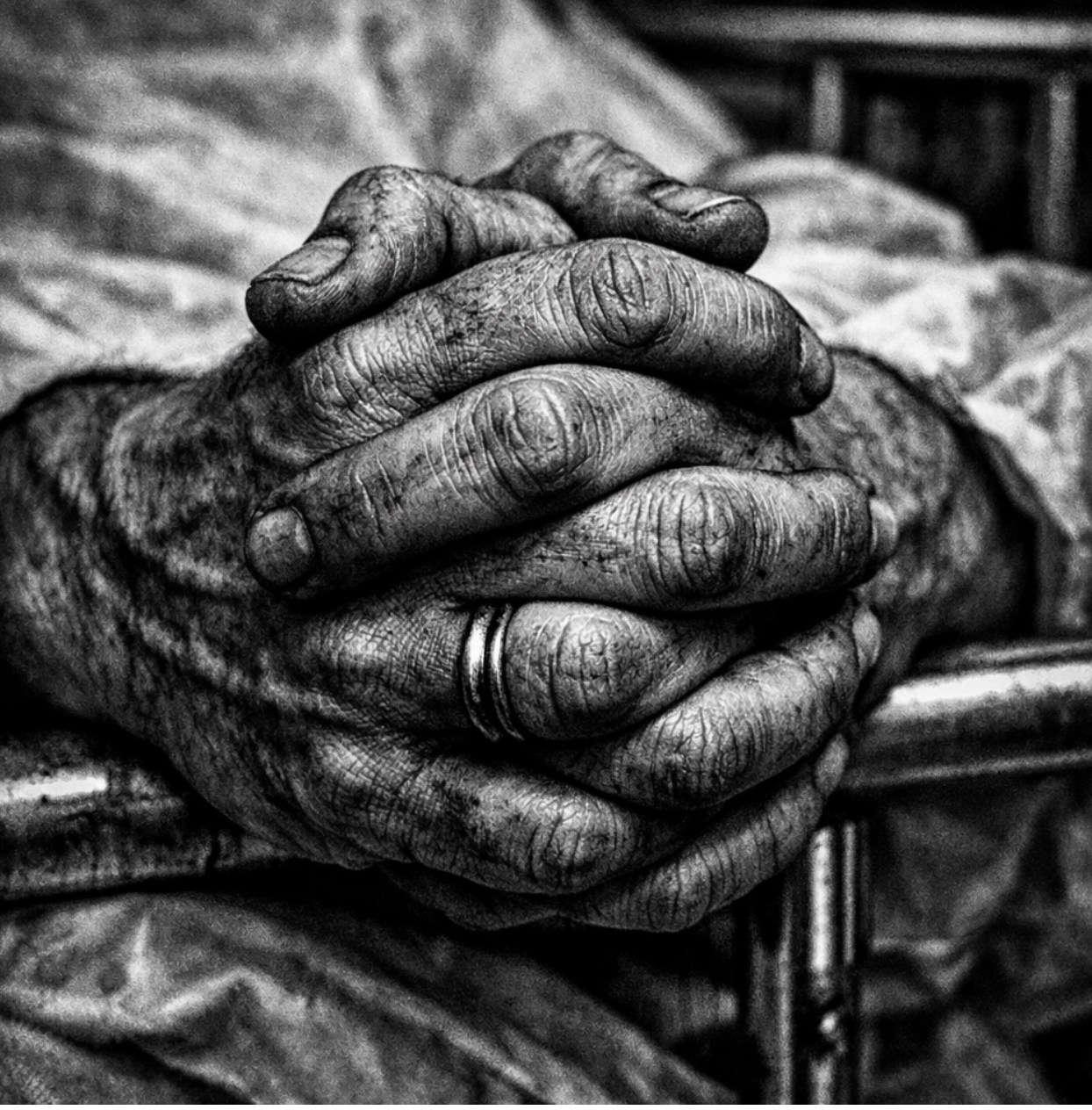
I’ve seen the way your eyes track the medical staff. I’ve seen the way you hold a hand: not just for their comfort, but for yours. I’ve seen the cold, half-empty coffee cup that has become a permanent fixture on the laminate side table.
That coffee is a symbol.
It was hot once. It was a moment of hope, a small luxury picked up in the cafeteria during a brief escape. Now, it’s just a bitter reminder of how long you’ve been sitting in that chair.
The silence of a hospital room at night isn't actually silent. It’s loud. It’s filled with the weight of "what ifs" and the clinical glow of monitors that never dim.
We talk a lot at REAL GRIT COMPANY about resilience. But resilience isn't just about the big battles. It’s about the quiet endurance of the middle-of-the-night watch.
It is about the strength required to remain steady when everything feels fragile.
I’ve held the clipboards. I’ve checked the vitals. I’ve been the one arriving in the ambulance. But I also know what it’s like to be the one left behind in the room when the sirens fade and the real work begins.
The work of staying.
Endurance is earned.
The Necessity of the Reset
You cannot pour from an empty cup.
It’s a cliché because it’s true. But when you are in "Hospital Mode," self-care feels like a betrayal. You feel like if you look away, something might happen. If you take a moment for yourself, you are failing the person in the bed.
That is a lie.
Survival mode is a short-term strategy. It’s meant for the sprint. But caregiving? Caregiving is the ultra-marathon.
If you don't reset, you break. And if you break, the person you are caring for loses their strongest advocate.
The "Caregiver Reset" isn't about a spa day. It’s about tactical emotional survival. It’s about taking five minutes: just five: to reclaim your own nervous system.
I call this the "Hospital Edition" reset. It’s built for the small spaces. It’s built for the person who can’t leave the room.
Tools for the Trenches
When I’m on a long shift, or when I’m sitting in that chair myself, I use specific tools to stay upright. These aren't theories. These are practices forged in the field.
1. Heart Coherence
This is science, not fluff. When your heart rate is jagged from stress, your brain can't think clearly. You move into a state of "diffused energy."
Try this:
Breathe in for five seconds.
Breathe out for five seconds.
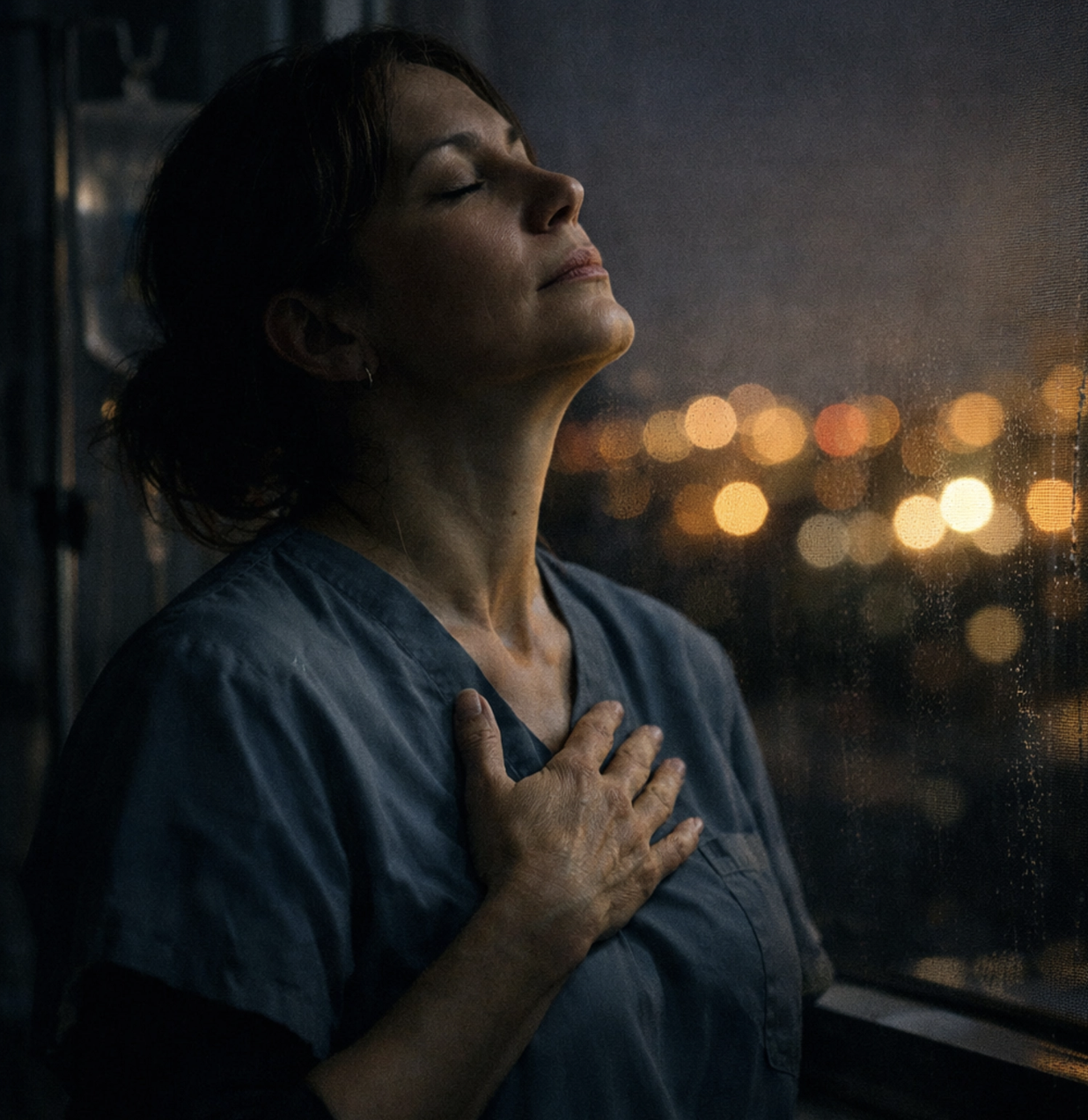
Focus your attention on the area around your heart.
As you breathe, try to feel a sense of gratitude or even just neutral stability.
Research from the HeartMath Institute shows this reduces anxiety and stabilizes mood. It tells your body: I am safe in this moment.
2. The 5-4-3-2-1 Grounding
The hospital room can start to feel like a vacuum. Your mind starts racing toward a future you can’t control. Pull it back to the present.
Name 5 things you can see (the dust on the monitor, the color of the blanket).
Name 4 things you can touch (the cold arm of the chair, the fabric of your shirt).
Name 3 things you can hear (the hum of the AC, the distant squeak of cart wheels).
Name 2 things you can smell (the sterile scent of alcohol wipes, your own coffee).
Name 1 thing you can taste.
3. The Physical Reclaim
Your body is holding the stress. It’s locked in your shoulders. It’s tight in your jaw.
Stand up. If you can’t leave the room, just stand by the window. Reach for the ceiling. Stretch your calves. Feel your feet on the floor.
You are a physical being, not just a set of worried thoughts. Reconnect with the machine that is carrying you.
Reset to remain.
Built, Not Born
There is a common misconception that caregivers are "born" with a special kind of patience.
That’s wrong.
Patience is a muscle. Endurance is a skill. You aren't doing this because it’s easy or because you were destined for it. You are doing it because it is required.
You are being built by this experience.
The person who walked into that hospital on day one is not the same person sitting in that chair tonight. You are tougher now. You are more observant. You have a deeper understanding of what it means to truly show up.
At REAL GRIT COMPANY, we believe that character is forged in the struggle. The "Real Grit" vibe isn't about being bulletproof. It’s about being tired, being raw, and staying anyway.
It’s about the "Quiet Endurance."
The Community of the Chair
If you are reading this from a hospital room, know this: You are not alone.
There is a silent community of us. We are the ones who know the specific taste of hospital cafeteria eggs at 7:00 AM. We know the way the fluorescent lights make everyone look like a ghost. We know the feeling of the "silent shift."
We see you.
I’ve seen you in the hallways of the ER. I’ve seen you in the quiet corners of the ICU. You are the backbone of the recovery process. You are the advocate, the historian, the hand-holder, and the one who remembers the medications when the doctor asks.
Your role is vital.
But you must protect the asset. And the asset is you.
Don't let the cold coffee be the only thing keeping you going. Take the five minutes. Do the breathing. Stretch your back.
We need you to stay strong. We need you to stay gritty.
Final Thoughts from the Chair
The night is long, but it does end.
The sun will eventually hit the hospital windows. The shifts will change. The doctors will do their rounds.
Through all of it, you remain the constant.
This is your legacy. This is your purpose in this moment. It isn't loud, and it won't get a standing ovation, but it is the most important work you will ever do.
So, take a breath.
Square your shoulders.
Reset your mind.
The one who stays is the one who wins the long game.
Stay the course.

For more stories of grit and the reality of the front lines, read Gail’s Story.
Grit is earned.